

Commercial HVAC Diagnosis and Repair for a Fitness Facility
- Business: Fit and Fight Gym
- Location: Niles, Illinois
- Property type: Commercial fitness facility
- Equipment: Three 2008 Carrier rooftop HVAC units
- Work performed: Coil cleaning, capacitor replacement, condenser fan motor replacement, airflow correction, and system testing
- Total invoice: $2,590
The Cooling Problem
Fit and Fight Gym in Niles was experiencing unreliable cooling during business hours. One rooftop HVAC unit was not cooling properly and repeatedly shut down while operating, leaving the gym too warm for members and disrupting daily operations.
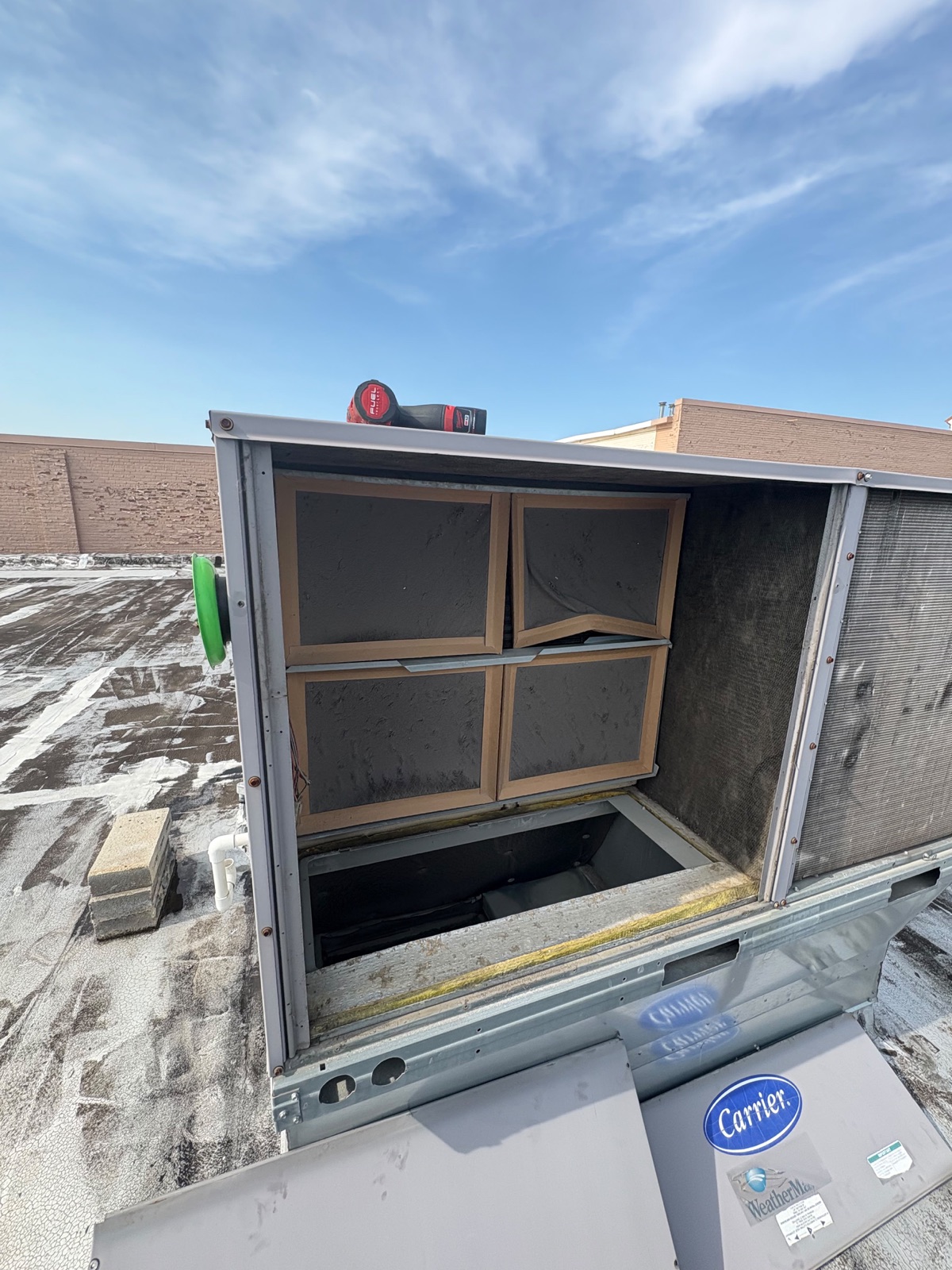
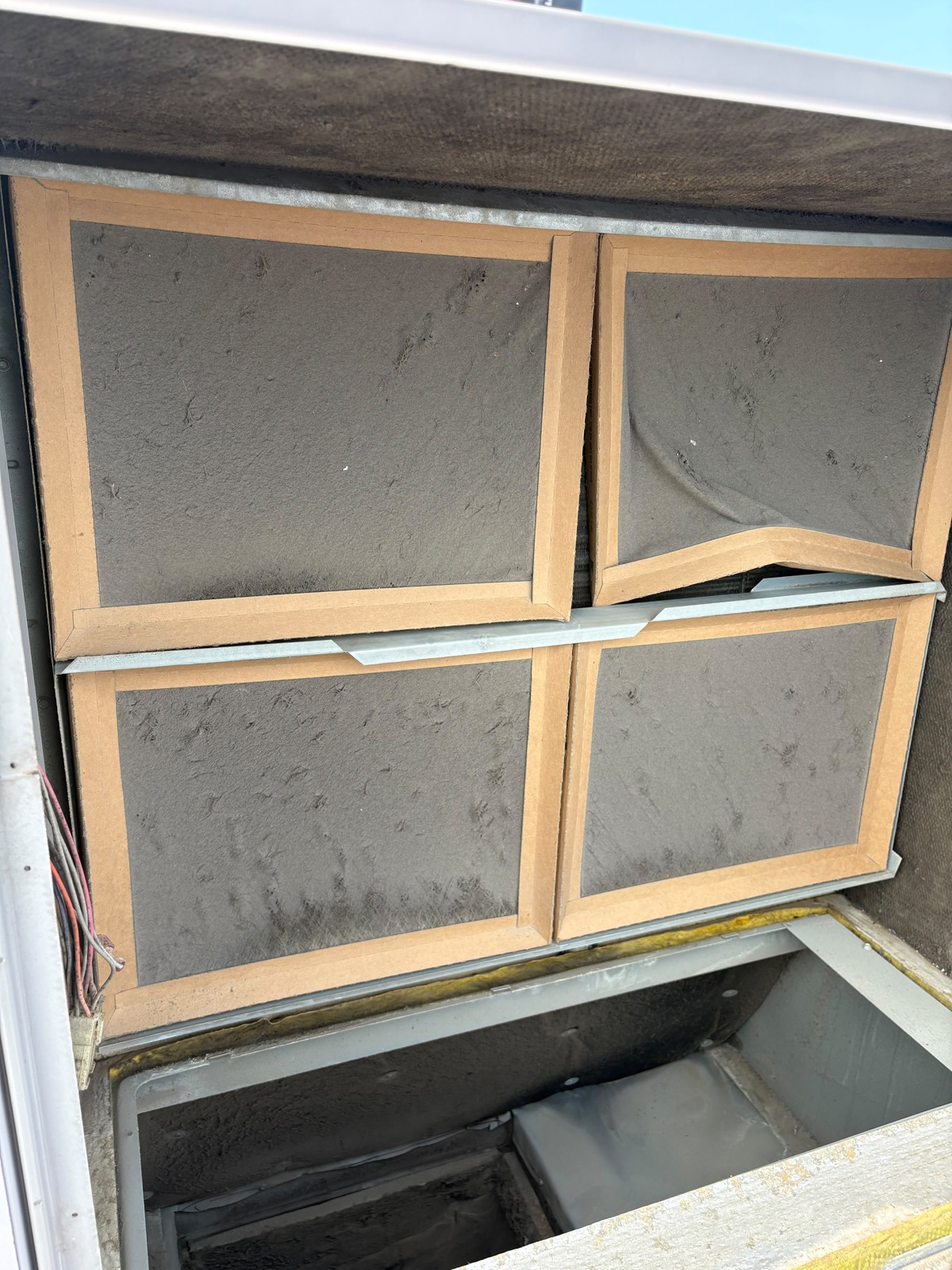
The facility had three Carrier rooftop units. Although the systems were still operational, they were overdue for maintenance. The evaporator and condenser coils were heavily contaminated, and several electrical and airflow-related issues were affecting performance.
Inspection and Diagnosis
AirFix inspected the equipment before recommending repairs, including:
- Thermostat operation
- Refrigerant pressures
- Electrical components
- Compressor operation
- Condenser fan motor and capacitor
- Airflow through the condenser
- Evaporator and condenser coils
- Safety controls
The inspection found heavily clogged evaporator and condenser coils on all three rooftop units, restricting heat transfer and reducing efficiency. One condenser fan capacitor had failed.
On the dual-compressor rooftop unit, one compressor was short cycling. While monitoring operation, we observed discharge pressure rising rapidly until the compressor shut down on its high-pressure safety switch.
Refrigerant pressures and the remaining electrical components were checked. Those readings helped rule out a refrigerant-charge problem and pointed the diagnosis toward restricted condenser airflow.
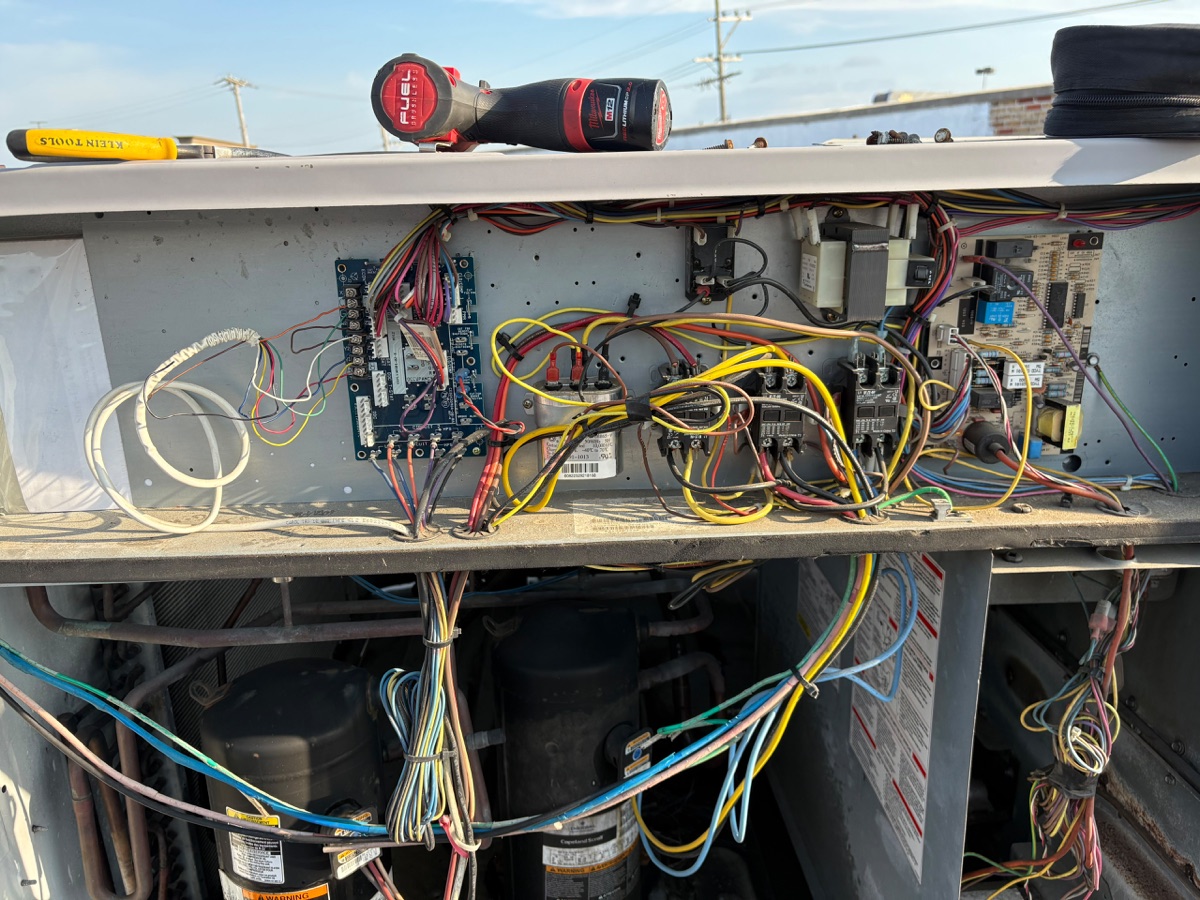
Further inspection of the condenser fan assembly revealed the primary cause of the high-pressure condition: the outdoor condenser fan motor was rotating in the wrong direction.
Incorrect fan rotation limited airflow across the condenser coil. Without sufficient airflow, the system could not reject heat properly, causing head pressure to climb and triggering the high-pressure safety shutdown. The fan motor was also defective and needed replacement.
The Repair
Because the rooftop units were still serviceable after diagnosis, a targeted AC repair was the most economical option. Replacing the affected motor restored the condenser airflow needed for normal operation and eliminated the condition causing compressor short cycling.
The completed work included:
- Cleaning evaporator coils on all three Carrier rooftop units
- Cleaning condenser coils on all three Carrier rooftop units
- Replacing one failed condenser fan capacitor
- Replacing the defective outdoor condenser fan motor
- Correcting and verifying condenser fan rotation
- Checking refrigerant operating pressures
- Completing operational testing on all three rooftop units
Testing Before Completion
Before leaving the site, AirFix verified:
- Correct condenser fan rotation
- Proper airflow across the condenser coil
- Stable refrigerant operating pressures
- Stable head pressure
- No further compressor short cycling
- Cooling performance on the affected unit
- Normal operation across all three rooftop HVAC units
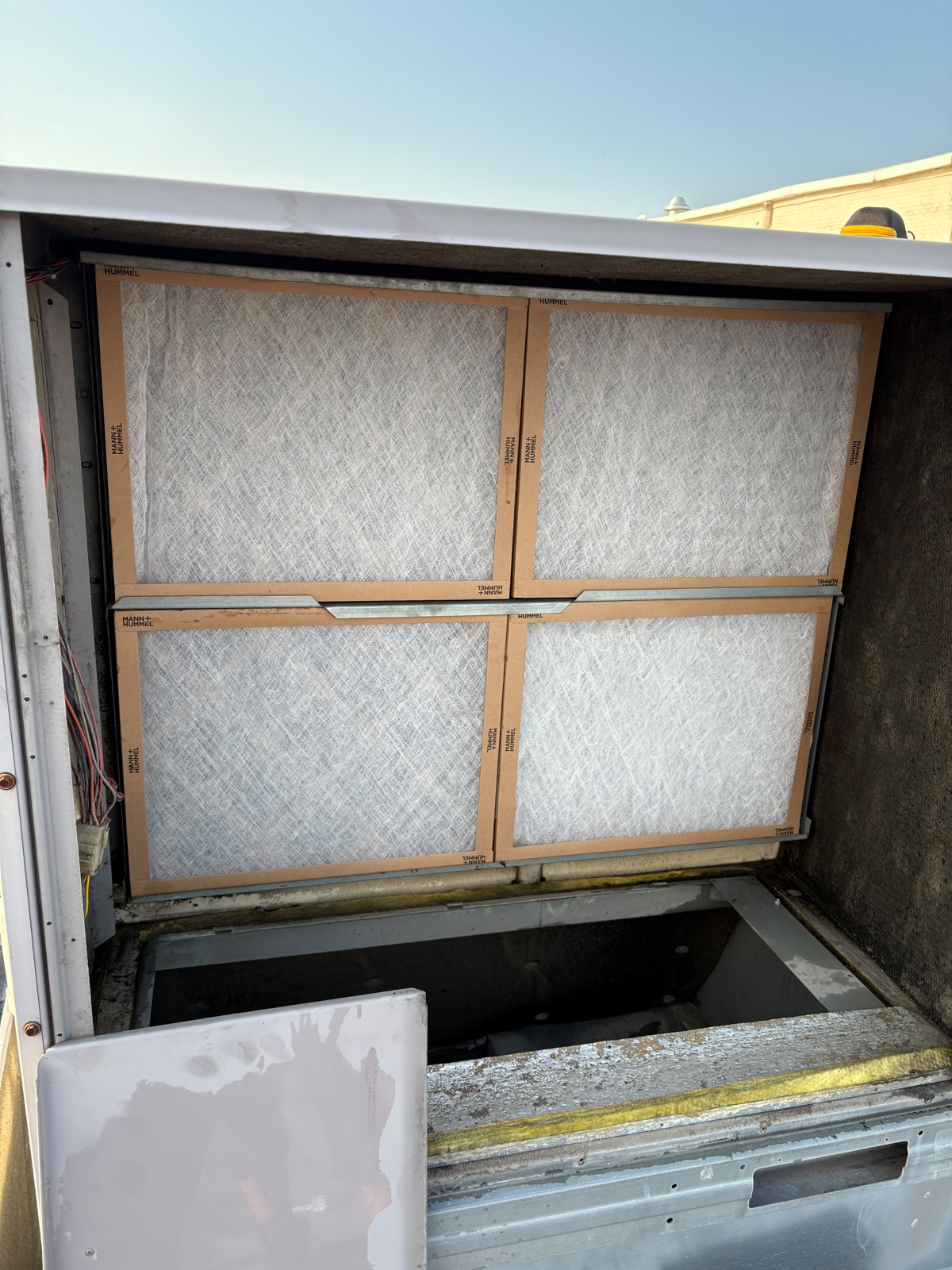
After the repair and testing, all three Carrier rooftop units were operating normally.
The completed unit is shown below with clean air filters in place.
Total Project Cost
The total invoice for this completed commercial HVAC repair was $2,590. The work included diagnosis and troubleshooting of three Carrier rooftop units, coil cleaning, replacement of a condenser fan capacitor and outdoor fan motor, refrigerant-pressure verification, and final performance testing.
Pricing note: This was the cost for this specific completed job. Commercial rooftop HVAC repair costs vary with equipment condition, refrigerant issues, failed components, rooftop access, and the scope of required work. Contact AirFix for an evaluation and quote specific to your property.
Preventive-Maintenance Recommendations
To help avoid future cooling interruptions and protect the compressors, the facility was advised to:
- Schedule preventive maintenance twice each year
- Replace air filters regularly
- Keep evaporator and condenser coils clean
- Request service promptly if cooling performance drops or short cycling returns
Regular maintenance helps equipment operate more efficiently and can help identify airflow or electrical issues before they lead to larger repairs.
Commercial Rooftop HVAC Service
When a rooftop HVAC unit is short cycling, shutting down on high pressure, or struggling to cool a commercial space, the cause may be more specific than a failed compressor. A thorough inspection can identify airflow restrictions, electrical failures, coil contamination, and other repairable issues before replacement is considered.
Contact AirFix Heating & Cooling to request a commercial HVAC evaluation.
Frequently Asked Questions
Why does a rooftop HVAC unit shut down on high pressure?
High-pressure shutdowns can occur when the system cannot reject heat effectively. Restricted condenser airflow, dirty condenser coils, fan-motor problems, incorrect fan rotation, refrigerant issues, or other mechanical faults may contribute. An on-site diagnosis is needed to identify the cause.
Can a bad condenser fan cause compressor short cycling?
Yes. If the condenser fan does not move enough air across the coil, head pressure can rise until the high-pressure safety switch shuts the compressor down. The system should be inspected promptly to reduce the risk of compressor damage.
Do dirty coils affect commercial HVAC cooling?
Yes. Contaminated evaporator and condenser coils reduce heat transfer and can make rooftop equipment work harder. Regular professional maintenance helps keep coils, airflow components, and electrical parts in working order.
When should a commercial rooftop unit be replaced instead of repaired?
Replacement may be appropriate when equipment has major failures, repeated costly repairs, or does not operate reliably after repair. In this case, testing showed that targeted maintenance and component replacement restored normal operation, so replacing the units was unnecessary.